Category: Modernity

  • Dugin Blesses the Rains Down in Africa

    H/T @dom [on Tunis]for theme song (I’d forgotten that one but Toto was very popular when I graduated high school back in 1979, and still so in 1982 when they cut this song)

    Dugin Blesses the Rains Down in Africa

    From discussion about an online forum, a Discord (heh), being destroyed by Trump Derangement Syndrome epidemic among marginally rational leftists…
    (after quoting Bohm as above)

    (more…)
  • Dugin on the Sacred Return of Politics

    https://alexanderdugin.substack.com/p/dugin-on-the-sacred-return-of-politics

    https://www.multipolarpress.com/p/dugin-on-the-sacred-return-of-politics

    Alexander Markovics interviews Alexander Dugin about how Platonic philosophy shaped Europe, why liberalism is rooted in atomistic and feminist metaphysics, and how the Fourth Political Theory offers a path beyond modernity to a transcendent and hierarchically militant political order grounded in eternity.

    1) Dear Prof. Dugin, in your book, Politica Aeterna, you describe how philosophy shapes and creates society, beginning with Platonic and Aristotelian thought and their influence on Europe. What is the essence of Political Platonism, how did it shape European society, and what kind of continuity exists between the thoughts of Plato and Christianity?

    To begin, I share the traditional understanding that philosophical thought shapes reality. The political dimension is always embedded in philosophy. As Martin Heidegger noted in his Black Notebooks, we should not view political philosophy as a separate discipline. Politics is already contained within philosophy from its inception. It is therefore entirely artificial to attempt a division between the two. All philosophies carry implicit political consequences, and all political systems find their roots in specific philosophical traditions.

    In the case of Plato, political thought and philosophical vision are absolutely homogeneous; a deep structural homology links them. Plato’s ontology — his concept of being, mind, nature, cosmos — is organized around vertical axes. These lead upward toward the realm of the good Agathon and ultimate unity. The One and the Good are identical, forming a transcendental principle: a heaven where the gods themselves ascend to contemplate the divine.

    This vertical structure underlies all being. The soul mirrors this ascent: it is structured like a mountain, culminating in a peak from which transcendence becomes visible. A proper state mirrors this triangle — this ascent — with those capable of contemplation, those attuned to something beyond mere statecraft, standing at the summit. The Platonic state is therefore built as a pyramid crowned by guardians — warrior-philosophers who protect and serve the transcendent.

    The philosopher-king rules not because of material power but because of his capacity to transcend himself, to commune with what lies beyond. Plato recognized that women, endowed with sufficient energy and spiritual strength, could also reach the level of guardianship. What matters is the contemplative capacity.

    This figure at the summit — a prophet or seer — is the sacralized embodiment of authority. Such a model dovetails with the Christian empire, in which the emperor served as the katechon, the one who restrains chaos. This Christianized continuation of Political Platonism flourished in Byzantium and was later transmitted to Russia. In contrast, Western Christianity, following Augustine, introduced a division between the Church and temporal authority — between transcendence and worldly governance — disrupting the Platonic unity.

    Charlemagne attempted to replicate the Byzantine model, and later, the Habsburg emperors continued this tradition. From Charlemagne to Nicholas II, Europe maintained a form of Christianized Political Platonism.

    However, when the philosophical orientation shifted — when transcendence was abandoned in favor of immanentism — a new, secularized state emerged. Political Platonism gave way to Political Atomism. Accepting atomistic philosophy, which holds that all reality consists of disconnected atoms moving through the void, leads us to liberal political structures. Liberalism is the political expression of atomistic metaphysics. The result is the rejection not just of the state’s sacred mission but of the state as such, to make way for autonomous, rootless individual masses.

    Thus, two opposing models arise: one vertical, symbolic, sacral — Political Platonism; and one horizontal, material, chaotic — Political Atomism. The former sees everything in politics as sacred and meaningful. The latter cuts off transcendence, creating sterile political systems lacking destiny or purpose.

    Modern liberalism, cosmopolitanism, and individualism all stem from this atomistic logic. If we are Platonists, we must remain faithful to a higher vision. Atomism and liberalism are philosophical choices, not inevitabilities. The message of Political Platonism is this: destiny is illusory. Philosophical regime change is a matter of will.

    They tell us, “You prefer the alternative, therefore you are subhuman, deviant, and dangerous.” Yet those who resist this pressure with strength endure. Even Donald Trump — though not a Political Platonist — represents a rejection of the final phase of liberal-atomistic degeneration. He reveals that the force once deemed inevitable can, in fact, be resisted. As with the Soviet Union — once thought eternal — liberalism too shall pass. It is merely a moment.

    This empowers the return of Political Platonism. It is not archaic. It is eternal. It was the bedrock of Europe, of the West itself. The restoration of the vertical, symbolic order is not a fantasy; it is a real and necessary choice.

    2) This leads me directly to my second question. In your book, you describe Platonic thought as the philosophy of the father, Aristotelian thought as the philosophy of the son, and you also speak of a third path: the philosophy of the mother. Why do you characterize atomism as a female philosophy, and what consequences did its re-adoption during the Renaissance have for European societies?

    This symbolism is not about gender in the ordinary biological sense. When I speak of the masculine or feminine Logos, I refer to archetypal forces, metaphysical tendencies. The Apollonian Logos — purely masculine — is embodied in Political Platonism. The father sits eternally above, on his unshakeable throne. We, as sons, inhabit the horizontal plane beneath, striving to conform to that transcendent order. Pallas Athene, a female deity, belongs to this Apollonian sphere because her essence is vertical, not maternal. The archetype transcends sex.

    The second Logos, Dionysian, aligns with Aristotelian thought. This is a mixed form — neither fully vertical nor fully horizontal. The Dionysian spirit moves between extremes, mediating, balancing. It is masculine and feminine, yet neither fully. There are Dionysian men and Dionysian women.

    The third Logos, that of Cybele — the Great Mother — is radically different. It rises from the bottom. It affirms the material as such, unformed, formless. The atom is its symbol — a particle severed from all wholes, devoid of inner meaning. In the myths of antiquity, the Great Mother produces all: gods, titans, demons. She sees no distinction. In her eyes, all are equal.

    This maternal materialism underlies liberalism, democracy, and feminism. It inverts the sacred hierarchy of Apollonian thought. The cults of the Great Mother were marked by castration, ecstatic madness, and clownish processions — traits visible today in the parades of postmodern identity politics. Queer theory, transgenderism, feminism — all emerge from this return of ancient Cybelian worship.

    I once visited Freiburg, where Heidegger taught. Today, the chair once reserved for phenomenology bears the title “Queer Studies.” That is no accident. It marks a metaphysical inversion. Dionysus has been replaced by Cybele. Heidegger’s path has been overtaken by atomistic, maternal ontology.

    This inversion operates across all levels: political, cultural, philosophical. Kamala Harris embodies the Cybelian archetype: not racially but metaphysically. In Hindu thought, her essence is tamas, the principle of inertia, obscurity, the underworld. She is an avatar of the Great Mother, as imagined by Pink Floyd in their lament for the “Atom Heart Mother.”

    3) You spoke of the materialistic and atomistic factors of modernity. In your book, you analyze the three paradigms of modernity: liberalism, communism, and revolutionary nationalism. What are the different concepts of society within these three paradigms? And in the context of the Fourth Political Theory, what is the special significance of the Conservative Revolution? How can it lead us beyond modernity towards a different kind of society?

    The three political ideologies — liberalism, communism, and nationalism — together constitute political modernity. Although they may appear to be in conflict, they are all branches of the same metaphysical tree. I prefer to treat nationalism not merely as revolutionary or fascist but as the broader concept of the bourgeois nation-state, which asserts the individual citizen as the political unit. All three paradigms — left, right, and center — are grounded in atomistic, materialist, and ultimately gynocratic ontologies.

    Each represents a variation of the Cybelian Logos. Liberalism isolates the atom, the individual, celebrating fragmentation. Communism fuses the atoms artificially into a mass, into collectivized abstraction. Nationalism assembles individuals into imagined traditions, creating states, languages, hymns, and symbols from the bottom upward. These modern nation-states replaced empires, which were hierarchical and sacred. Nationalism thus serves as another Cybelian manifestation — claiming to be organic while in fact built through fabrication.

    In the twentieth century, these three ideologies waged war against one another, each proclaiming itself the embodiment of the future. Liberals, fascists, communists — all claimed the mantle of historical destiny. Yet liberalism prevailed — not by accident, nor because it was more practical or attractive, but because it was the most faithful expression of atomistic materialism. It left the atoms alone, unbound, unleashing individualism in its purest form. In that metaphysical contest, the most consistent ideology — liberalism — emerged victorious.

    We now live under this triumph: the final phase of the Cybelian reign. Liberalism has revealed its essence: transgenderism, transhumanism, the complete normalization of sin. The defeated ideologies — communism and nationalism — have tried to adapt, submitting to the rule of the Great Mother. They are now outdated versions of the same impulse, lingering vestiges of earlier stages of modernity.

    To escape this trap, I conceived the Fourth Political Theory. Initially, my thought was strategic: unite those still resisting liberalism — disparate forces on the margins, whether nationalist or communist. I imagined a synthesis. When applied practically, this approach proved plausible. In Italy, the alliance of the Five Star Movement and Lega Nord could disrupt the liberal center. In France, a coalition of Mélenchon and Marine Le Pen could challenge Macron. In Germany, Sahra Wagenknecht and the AfD together would be victorious. Alone, each remains weak; together, they break the spell.

    Alain de Benoist recently observed that Trump is a working-class candidate. This convergence of left and right finds expression in practice. Yet I soon realized that such coalitions, while effective, do not go far enough. They remain inside the labyrinth of modernity.

    The Fourth Political Theory is an invitation to exit that labyrinth altogether. Not to side with liberalism, communism, or nationalism, but to reject all three as modern. The aim is to explode the maze, to cut the Gordian knot. We do not seek to reconfigure modernity; we aim to transcend it. The Fourth Political Theory looks both backward to premodern traditions and forward to a postmodern critique of modernity.

    It is not about returning to the past but about accessing eternal patterns: empires, sacred orders, Political Platonism. At the same time, we must not shy away from deploying contemporary tools: structuralism, anthropology, phenomenology. Multipolarity, too, becomes a key concept: a world of many civilizations, each sovereign, each rooted in its own logos.

    The Traditionalist thinkers — René Guénon, Julius Evola — show how to express perennial truths in modern languages. Evola, for example, applies the values of Rome to critiques of modern art. Likewise, the Conservative Revolution in Germany, despite its errors, sought a path beyond liberal modernity. So did the Kyoto School in Japan. These were not uniquely Russian or European developments. They are global.

    The Fourth Political Theory is open. It has a number, not a name. Its name must be discovered differently in each civilization. It is not a closed system but a direction. We do not yet know what lies at its end. It is a search. That is its power.

    4) I see. A very interesting point you made is that the Second and Third Political Theories lost the battle against liberalism because they were not modern enough. From a sociological standpoint, what was the core of the Second and Third Political Theories, and why were they insufficiently modern to win the battle for the legacy of modernity?

    We can observe that Socialist revolutions triumphed not where Marx predicted but precisely where he said they could never occur. He failed to account for the power of traditional elements. The real driving force of the Bolshevik Revolution in Russia was the strength of the peasantry — deeply traditional people who desired liberation from a Westernized elite. That revolution was, at its heart, national. It was a popular uprising rooted in the soil of a premodern society, cloaked in Marxist language but alien to Marx’s expectations.

    According to Marx, such a revolution could not occur in Russia. Lenin’s doctrine was already a profound revision of Marxism; Stalin’s was even more so. Stalin declared that socialism could be built in a single country — an idea rejected by both Marx and Lenin. Thus, the success of Communism in Russia, and later in China, Vietnam, and elsewhere, was not due to class structure, industrial development, or a powerful proletariat — these elements were either weak or nonexistent. Instead, the success came from the persistence of tradition.

    Mao’s China, despite its Marxist rhetoric, remained far more Confucian and traditional in character. The revolutions succeeded because they drew upon ancient forces: myth, nationalism, agrarian solidarity. And yet, paradoxically, this very reliance on premodern foundations doomed them in the long term. They bore within them metaphysical contradictions.

    The same applies to the Third Political Theory: revolutionary nationalism. While it claimed to be modern, it often borrowed from archaic archetypes: heroic masculinity, mythic leadership, militarized aesthetics. Fascism and National Socialism, despite their claims to futurism, were saturated with premodern symbols. These elements became distortions — caricatures, in some cases — of the Apollonian or Dionysian types. Precisely because of these deep premodern resonances, both nationalism and communism proved incapable of sustaining the purely modern worldview required to defeat liberalism.

    Thus, both the Second and Third Political Theories failed because they were metaphysically impure — entangled with traditional structures incompatible with modernity’s inner logic. Liberalism, by contrast, was fully modern, fully atomistic, entirely consistent with the metaphysical project of dissolving all verticality. This is why it triumphed.

    5) Just before, you spoke about postmodernism. You mentioned it in two senses: first, as the final consequence of atomism, which you describe as something deeply destructive and opposed to Platonism and Traditionalism; second, as a potential ally of Traditionalism in the struggle against modernity. Could you clarify these two meanings of postmodernism in your work? Also, you described the defeat of Kamala Harris and the globalists in the recent US election as a partial defeat of liberalism. In your book, you equate postmodernism with hypermodernity and also reference the Dark Enlightenment, including the work of Reza Negarestani and other thinkers. What conclusions should we draw about postmodernism in light of the Dark Enlightenment and its implications for society?

    Postmodernism, on one hand, is the final unfolding of modernity — its logical conclusion, or what I sometimes call hypermodernity. As such, it reveals the full truth of the modern project, unmasked. In this sense, it is preferable to earlier stages of modernity, which veiled their intentions beneath humanitarianism, rationalism, or progress. The naked face of evil is easier to confront than the disguised one. When Satan removes his mask, illusions are no longer possible. That is the advantage of postmodernism: its honesty.

    Today, we see what lies at the heart of the modern Western liberal order. Sexual scandals involving elite figures like Puff Daddy or Jeffrey Epstein are not anomalies; they are expressions of the system’s core. The rhetoric of humanitarianism — the Open Society Foundations, Doctors Without Borders, climate activism — often conceals a black mass beneath. The rituals of liberal democracy mask baby sacrifices, predation, and metaphysical perversion. This is the true form of the elite: witches, rapists, and destroyers. Satan is no longer hiding.

    Modernity denied both God and the Devil. Postmodernism admits there is no God and exalts the Devil. This is the Antichrist revealed — not metaphorically but literally. This clarity is terrifying yet liberating. As Alex Jones rightly says, this is the moment of awakening. The compromise is over. There is no longer a mixture of good and evil — only evil, unfiltered. Those who oppose this satanic order are demonized as Nazis, Putinists, and extremists.

    Yet this revelation also awakens resistance. Eschatological awakening follows the unveiling of the Antichrist. We are now summoned into the final battle. Traditionalism, in its classical form, is insufficient for this moment. In traditional society, one lives in harmony, in balance, through prayer, sacrifice, family, and sacred duty. War was episodic, not essential. Now, war is permanent because satanic forces are omnipresent. There are no longer safe spaces of tradition left untouched.

    To be a Traditionalist today is to be a warrior. There is no neutrality, no retreat. You must fight — philosophically, spiritually, and culturally. This is eschatological Traditionalism: not nostalgic but militant. In this struggle, we may deploy certain elements developed within postmodernism — those tools which criticize or transcend modernity.

    Phenomenology, structuralism, cultural anthropology, psychoanalysis — these can serve us if reoriented. Heidegger’s Dasein, Lévi-Strauss’s cultural relativism, even aspects of Lacan or Jung — these may become weapons. There exists a right-wing postmodernism, a metaphysical counter to leftist deconstruction. This postmodernism from the right does not reject Tradition. It allies with it in the final struggle.

    The Dark Enlightenment — figures like Nick Land, Reza Negarestani, the Black Deleuzians — embrace the abyss. They summon Lovecraftian gods, idiotic deities from beyond time. They are self-declared prophets of the inhuman. These thinkers are valuable in that they expose the innermost logic of modernity. Their horror is instructive.

    In this moment, Guénon’s vision of the “inverted hierarchy” becomes real. Gog and Magog have emerged from the cracks of the Earth. They gather openly. They host conferences, fund institutions, and participate in ritual abuse while claiming to represent rationality. This is the end of the compromise.

    Now begins the final war.

    6) Finally, in your book, you describe the Fourth Political Theory as a model for transcending modernity, one that incorporates elements of Traditionalism, Political Platonism, and metaphysical realism. How close is the Fourth Political Theory to Plato’s Kallipolis? What can we actually do to move from the infernal postmodern society of today towards this ideal state?

    The most important step is to realize that Kallipolis, the ideal Platonic city, lies not behind us but ahead of us. It belongs not to the past but to eternity. We are not returning to a golden age. We are approaching its re-manifestation. In this particular moment of history, we find ourselves far closer to the end than to the beginning. We live in midnight, the final hour of human time.

    At the dawn of history, the archetype of the sacred city revealed itself. Kallipolis was then remembered, preserved, and transmitted through ritual, law, myth, and initiation. Tradition was the act of remembrance: to recall the proportions of that perfect city, to approximate its form through philosophy, kingship, and sacred order. As memory faded, we adjusted our political structures with increasing error and compromise. Over centuries, we forgot more and more.

    Now, at the end, we no longer remember Kallipolis. We have accepted forgetfulness as normality. Liberal democracy becomes the official doctrine of oblivion. No longer is sin resisted; it is affirmed, celebrated, and legalized. Homosexual marriage is not merely tolerated; it is declared sacred. The fall becomes doctrine.

    Yet, Kallipolis also returns at the end of time. In the Christian tradition, this is the New Jerusalem. The heavenly city is not a utopia; it is a reappearance of eternity, a final echo of the archetype. The New Jerusalem is not merely symbolic. It is real. It existed, exists, and will exist. In the last hour, it draws near. Compared to the vast distance from origin to fall, the step between now and the return is small. We stand before it.

    The difference between classical Traditionalism and the Fourth Political Theory lies here: we adopt an eschatological stance. We do not look back longingly; we look forward with eternal fidelity. Our gaze pierces the veil of collapse to glimpse the eternal pattern beyond.

    We do not expect evidence. We fight in total darkness. The last spark of light has vanished from the horizon. Yet, we believe. Not because the light is visible, but because it exists in eternity. The true believer follows God not because God is seen, but because He is.

    Even if it were proven to us that God does not exist, we would fight for Him. That is the essence of heroic Traditionalism: a voluntarism beyond proof, beyond inertia. We remain loyal when the world has turned away. We pray in the ruins. We build cathedrals in the desert.

    Thus, the Fourth Political Theory comes after modernity, not before it. It is born in the ashes, forged in the fire of eschatological struggle. It is not inherited; it is chosen.

    # # #

  • Green Wizardry, Vol. 1, No. 2 (Feb 2025)

    Green Wizardry, Vol. 1, No. 2 – by Macrobius

    There will be an edition of The Autodidact Newsletter proper, later this weekend, which will have announcements for upcoming ‘email correspondence courses’ in Academic Year 2025-2026, but here’s a quick edition of ‘Green Wizardry’ reviewing links of the Discord channel of that name, which is associated with Macrobius’ Saturnalia substack. One number will come out each week until we are caught up with the monthly digests!

    February 2025

    Charles Hugh Smith’s Substack

    Lots of Solutions, But for Which Problems?

    Problems, problems, problems. No worries, we have solutions. Solutions abound, but the question is: are they actually resolving the core problems, or are they “solutions” that leave the real problems untouched so the status quo remains safely intact…

    Read more

    6 months ago · 60 likes · 9 comments · Charles Hugh Smith

    Arctic Meltdown

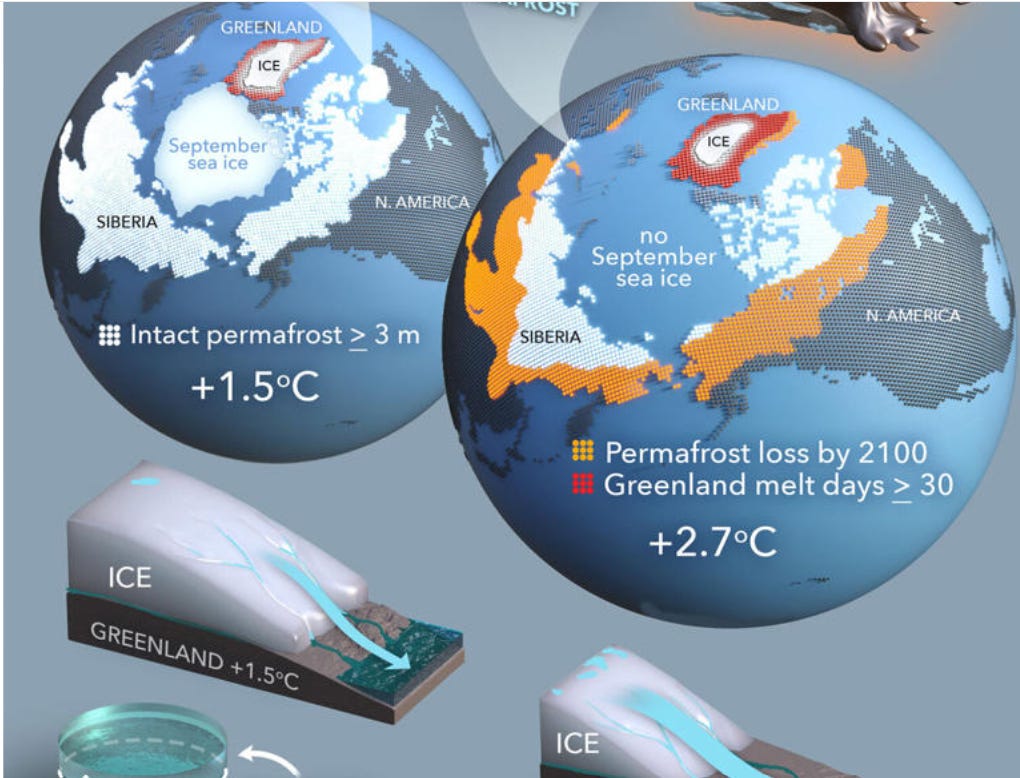
    https://www.msn.com/en-us/weather/topstories/an-arctic-meltdown-is-accelerating-global-warming-how-will-we-adapt/ar-AA1yB7GV

    https://www.science.org/doi/10.1126/science.ads1549 (abstract only – not a full article)

    https://climateatlas.ca/map/canada/ffp_2030_85#lat=61.19&lng=-82.97&z=3

    We Join the J Michael Greer’s analysis of Twilight of the Gods… in progress:

    https://tunisbayclub.com/index.php?threads/the-archdruid-on-wagner-the-rheingold-blockchain-and-class-warfare.2871

    MSM Blames Peak Oil on Primates

    https://www.abc.net.au/news/2025-02-10/sri-lanka-blackout-blamed-on-monkey/104917274

    Arthur’s Substack

    What Will Energy Dominance Be Used For?

    The energy part of Treasury Secretary Scott Bessent’s “3-3-3” plan aims to boost U.S. oil production by 3 million barrels/day by 2028, reinforcing Trump’s Energy Dominance push…

    Read more

    5 months ago · 5 likes · 2 comments · Arthur Berman

    Zero Input Agriculture

    Post-industrial farming, sowing the seeds of the next civilisation.

    By Shane

    Reader comment: Spengler bats .950 with a couple plate-appearances still to go, wow..
    https://tunisbayclub.com/index.php?threads/oswald-spengler’s-decline-of-the-west-the-100th-anniversary-update.1867/

    https://tunisbayclub.com/index.php?threads/the-h1b-fracas-and-manifest-spenglerian-wyrd.2919

    Rapid Onset Political Enlightenment Syndrome
    https://tunisbayclub.com/index.php?threads/rapid-onset-political-enlightenment.2912/

    The Bronze Age Gardening Advice Thread
    https://tunisbayclub.com/index.php?threads/the-bronze-age-gardening-advice-thread.1151/

    If you don’t know the site, The Great Simplification is a must:

    https://embed.podcasts.apple.com/fi/podcast/wisdom-over-power-why-contemplation-wonder-are-essential/id1604218333?i=1000696228755

    Citation needed:

    The Great Simplification with Nate Hagens – Podcast – Apple Podcasts

    The Great Simplification with Nate Hagens

    That wraps up the links for February!

  • Green Wizardry Vol. 1, No. 1 (Jan 2025)

    Green Wizardry, Vol. 1, No. 1 – by Macrobius

    It’s amazing how long ago January and the Inauguration are, eh? Here is what we were discussing on the Discord associated with this substack (DM me for invite to the server — I’ll eventually get around to putting invite link for paid subscribers which is everyone who subscribed in the first half of 2025 anyway, while I get things organised.

    The Autodidact and associated newsletters (e-zines?) come out weekly on Saturdays, and for now, this is just a digest of links to articles and topics discussed, on a per month basis so I can stagger the digests. 😉

    Channels on the discord are somewhat like ‘subreddits’ or BBS subforums, and the #green-wizardry channel is framed:

    This is the place for ecology, Michael John Greer discussion, Peak Oil, Spengler, sustainable living.

    Collapse now, and beat the rush

    A couple of stacks from that milieu spilled ever here (I’ll link them after the article links.

    Anyway, here is what we talked about in January:

    https://www.cnbc.com/2025/01/22/how-climate-change-is-reshaping-home-insurance-costs-in-the-us.html?utm_source=firefox-newtab-en-us

    Before we get too far on this thread I need to mention Dick’s Practical Receipts [Recipes] or How they Did it in the 1870s

    1884 edition should be out of copyright and downloadable: https://www.google.com/books/edition/Encyclopedia_of_Practical_Receipts_and_P/JsNEAQAAMAAJ

    https://www.zerohedge.com/commodities/aggressive-power-surge-goldmans-powering-america-theme-may-supercharge-trumps-stargate

    https://embed.bsky.app/embed/did:plc:3wdfoo2ul6ptndaw4gvtogry/app.bsky.feed.post/3lgy5gidprc2y?id=8246493009327223


    Here are our articles relevant to this digest:

    The Archdruid on Wagner, the Rheingold Blockchain, and Class Warfare

    The Kaya Identity, Econophysics, and the Quadrivium

  • Green Wizardry, Vol. 1, No. 3 (March 2025)

    Worst of both worlds–Global Warming and an Ice Age:

    https://www.msn.com/en-us/weather/topstories/could-global-warming-start-a-new-ice-age/vi-AA1zEHpP

    In the interests of providing ‘a variety of opinions’ I’ve added two naysayer articles to complement the AMOC doom ones

    I’m not particularly impressed with the two articles by Watts — they both do cite interesting articles from Jan 2025 / Feb 2025 Nature but one should just go read those I think. I’ll link in a second. Blathering about how bad models are then backing your point up with links to meta-analysis by the CMIP6 committee, comparing 24 different coupled ESM models, because you know your readers won’t bother to actually read the evidence and accept your knuckle-drag simplistic take at face value… we’ll I won’t say it won’t build you readership for your Denial Grift but … um…

    Atlantic overturning inferred from air-sea heat fluxes indicates no decline since the 1960s | Nature Communications  (Jan 2025)

    Continued Atlantic overturning circulation even under climate extremes | Nature  (Feb 2025)

    Preface to an interesting Orthodox Christian take on the ecological crisis as rooted in the desacralization of Nature (a theme that Sherrard as a Traditionalist, though with his differences from Guenon due to being an Eastern Orthodox Christian, he takes from that school) — and intro to his work:

    https://www.orth-transfiguration.org/wp-content/uploads/2016/07/Sherrard-Philp-Dearth-and-Res-of-Sacred-Cosmology-1992.pdf

    One thing we no longer need to be told is that we are in the throes of a crisis of the most appalling dimensions. We tend to call this crisis the ecological crisis, and this is a fair description in so far as its effects are manifest in the ecological sphere. For here the message is quite clear: our entire way of life is humanly and environmentally suicidal, and unless we change it radically there is no way in which we can avoid catastrophe. Without such change the whole adventure of civilization will come to an end during the lifetime of many now living.

    Sherrard, Nasr, Dugin make an interesting succession of Traditionalists on this topic.

    https://ia600909.us.archive.org/0/items/PhilipSherrardHumanImageWorldImageTheDeathAndResurrectionOfSacredCosmology/Philip Sherrard – Human Image%2C World Image The Death and Resurrection of Sacred Cosmology_text.pdf 

    My comments on the latest from Greer:

    Next Intermezzo on Parsifal up,

    For those who missed his series on KEK:

    https://www.ecosophia.net/tag/kek/  (final article in series at top)

    For those who don’t understand the ‘esoteric take’ — he’s using Wagner’s opera to describe the Trump / Musk / RFKjr admin.

    Artistry is Technics, in Greek.

    The Bronze Age Gardening thread:
    https://tunisbayclub.com/index.php?threads/the-bronze-age-gardening-advice-thread.1151/ 

    Rising Sea causes Ghost Forests in NC
    https://www.newsweek.com/ghost-forests-north-carolina-coast-sea-level-rise-cypress-trees-1977476 

    https://www.zerohedge.com/markets/pa-faces-looming-power-crisis-after-gov-shapiros-electricity-tax-and-plant-closures

    Persistence of pesticide in soil for decades
    https://pubs.acs.org/doi/epdf/10.1021/acs.est.0c06405?ref=article_openPDF 

    A new kind of LED (using Perovskiite) – burns out in hours so going to be a while:
    https://phys.org/news/2024-01-perovskite-thousand-brighter-oleds.html 

    ‘Kubrick is the Clintons, LaRouche is Trump.’ https://archive.amarna-forum.net/salo/salo/003885_the-wrong-way-wizard-on-larouche-and-kubrick_p001_o.html 

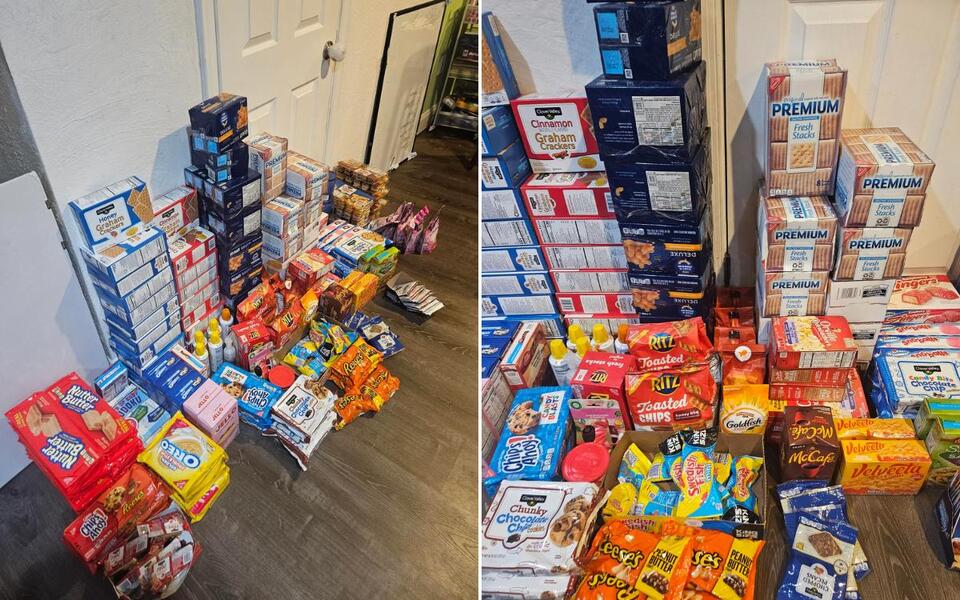
    https://www.newsbreak.com/share/3857555565923-couple-go-dumpster-diving-behind-dollar-general-find-haul-worth-600

    The Founding Fathers would have thrown it in the bay and put lamps in the Old North Church to guide Paul Revere

    Interesting framing: ‘AGW is actually a mental health issue’

    It’s not really a ‘mental health problem’ if you believe ‘we are so totally fucked. bummer.’

    It’s a realistic and useful adaptation
    https://www.msn.com/en-us/health/other/climate-change-fueling-mental-health-crisis-in-areas-most-affected-by-climate-crisis/ar-AA1Banl9 

    Green deserts in China
    https://x.com/XH_Lee23/status/1903390497982275995 

    Nature is taking back parts of Detroit:

    The Fabulous Ruins of Detroit Tour 

    https://www.orth-transfiguration.org/wp-content/uploads/2016/07/Sherrard-Philp-Dearth-and-Res-of-Sacred-Cosmology-1992.pdf

    One thing we no longer need to be told is that we are in the throes of a crisis of the most appalling dimensions. We tend to call this crisis the ecological crisis, and this is a fair description in so far as its effects are manifest in the ecological sphere. For here the message is quite clear: our entire way of life is humanly and environmentally suicidal, and unless we change it radically there is no way in which we can avoid catastrophe. Without such change the whole adventure of civilization will come to an end during the lifetime of many now living.

    Y’all need to understand the life cycle of a Tree Octopus (fave prey of the Sasquatch) https://zapatopi.net/treeoctopus/ 

  • Every Tweet is an Index Card

    # Every Tweet is an Index Card. (1/)

    You can write a lot on an index card, but there’s a limit. The same is true for tweets. (2/)

    The German word for Index Card is a #Zettel and the cards are placed in a #Zettelkasten. (3/)

    Index cards contain notes, which should be written in a language call *Markdown*. (4/)

    Index cards are prompts. Tweets are prompts too. For someone. (5/)

    Markdown is the native language for interacting with AIs, as in Prompt Engineering. (6/)

    \## What Markdown can do: (7/)

    It can have headings and suhheadings, marked with a `#` (8/)

    You do _italics like this_ (9/)

    You can make things **bold** like this. (10/)

    You can write literal text or program statements in Markdown like this, with back tics (11/)

    Some dialects of markdown understand hashtags, some don’t. (11/)

    A dialect is a dialogue is dialectic. It’s for talking together. (12/)

    You can try to attach a document or picture to an index card, but that doesn’t work very well. Index cards are mostly for text. (13/)

    You can link index cards (tweets) together with a hyperlink. This is how you do quotes and attachments too – you link them. (14/)

    Index cards are dots, and hyperlinks are arrows. The arrows let you move from card to card. (15/)

    Every tweet (and every index card) is also a passage in a game. (16/)

    Would you like to play a game? Let’s play Adventure, a text game. (17/)

    You are in a maze of twisted little tweets, all alike. (18/)

    Index cards and tweets (which are the passage prompts in a game, and let you navigate to other passages by following the arrows), can also be used to write books. (19/)

    The japanese call this Keitai shosetsu. It is an art form, invented in the aughties, by humans who were texting on mobile phones. (20/)

    Keitai shosetsu is a form of dialectic. (21/)

    Some novels let you choose your own adventure. (22/)

    You don’t always have to go to the next tweet in the thread. (23/)

    You can branch out. Branches make trees. (24/)

    Every index card should have a unique identifier called a slug. (25/)

    At twitter, the slug for the previous tweet is 1943722229713580200. Look at its link to confirm this. (26/)

    Quotations and Quines are a kind of links in a mathematical construct called a Category. Categories are pictures of dots and arrows. (27/)

    In mathematics, Category Theory is an alternative representation of Symbolic Logic, called Categorical Logic.[1][2] (28/)

    In Aristotle, who invented Category Theory, the categories are of course dots and arrows too, though he doesn’t call them that. (29/)

    Aristotle calls his dots, or index cards, ‘terms’. (30/)

    Stop and explore Aristotle
    [Categories, by Aristotle; translated by E. M. Edghill]

    https://homepages.uc.edu/~martinj/H…le/Aristotle – Categories – Edghill trans.pdf
    Or go to next tweet in thread… (31/)

    Dots (web pages) and arrows (hyperlinks) on the Semantic Web, are described by RDF, the Resource Description Framework, and its Semantics. And other Languages. (32/)

    The prompt, or #Zettel, is both for the Human and for the AI (computer) (33/)

    Index cards (prompts) can be used for training. (34/)

    Search the query {Behavioural Programme Learning} (35/)

    Reinforcement Learning, or Q Learning, is a kind of behavioural training programme for humans or AIs. Read this tweet again. (36/)

    Humans and AIs engage in a dialogue with each other, by passing prompts, or index cards written in Markdown, back and forth. (37/)

    The outcome of Dialectic depends on both players, their environment (which is another player, called ‘Nature’ or ‘The Battlespace’), and what plays they make. (40/)

    To read more about #Zettels and #Zettlekasten,

    https://zenkit.com/en/blog/a-beginners-guide-to-the-zettelkasten-method/
    Or, continue playing tweet game. (41/)

    What do you get when you multiply 6 * 7? (42/)

    —–

    [1]: [cl_and_tt_v2.pdf]

    https://ericschmid-uchicago.github.io/notes/cl_and_tt_v2.pdf
    [2]: [LNPnotes.dvi]

    https://www.cs.ox.ac.uk/people/bob.coecke/AbrNikos.pdf

    Article via TBC
    https://tunisbayclub.com/index.php?threads/every-tweet-is-an-index-card.3063/

  • Meme Laboratory: Weaponised Memes

    Meme Laboratory: Weaponised Memes | TBC

    [[ This is a poast about building a web out of clickable pictures that link to each other ]]

    Reprint of a Salo howto thread archived here: http://whigdev.com/white/index.php?threads/meme-laboratory-weaponised-memes.36/

    via http://whigdev.com/forum/viewtopic.php?f=11&t=2641

    and

    https://salo-forum.com/index.php?thread … cript.7178 [[ broken now ]]

    viewtopic.php?f=11&t=1978 | Graphics Request Thread [[ will try to restore content below ]]

    viewtopic.php?f=29&t=2089 | Fun with SVG [[ will try to restore content below ]]

    I’ve been playing around with using standalone SVG files as a ‘replacement’ for HTML. It’s a bit primitive, but I thought I’d share some working samples to get anyone interested started.

    – I want to go back to an easier web — the web exists to fetch static files. Pulling in lots of files — 100s? 1000s? to view a single page is a non-goal.

    – I’m interested in graphics, data visualisation, and memes — that is how people learn now. We still need text though. And no, I don’t want to pull in a giant library like d3 just to draw simple plot.

    – You should write your own damn code anyway. Libraries are for the birds. All scientists know this. Sure, there are exceptions. No one wants to write their own OS or re-write BLAS just to multiply matrices. But those few exceptions aside, you should know and love every line of code you use.

    – SVG uses XLINK for hyperlinks. I know. XML is so aughties. SVG 1.1 is the current well suported standard. SVG 2 is ‘out there’ and getting moar like HTML5 and less like XHTML. festina lente.

    – We still need to embed HTML though

    – SVG has a DOM but it is not *your* DOM. Getting styles to play nicely between the HTML and SVG/XML world, or between DOMs, requires a lot of namespace majick. That’s what this thread is about….

    So. Working samples:

    [[ code at the link ]]

    Largely taken from a book on SVG, but adding in how to do hyperlinks — ‘interactivity’ and programming are not features to toss as an afterthought in Chapter 18! They are the essence of the matter.

    Recovering above threads tough but here’s fresher content: http://whigdev.com/white/index.php?threads/where-are-all-the-animated-svgs.109/

    Library of Babylon wins again

    —–

    I’ve been playing around with using standalone SVG files as a ‘replacement’ for HTML. It’s a bit primitive, but I thought I’d share some working samples to get anyone interested started.

    – I want to go back to an easier web — the web exists to fetch static files. Pulling in lots of files — 100s? 1000s? to view a single page is a non-goal.

    – I’m interested in graphics, data visualisation, and memes — that is how people learn now. We still need text though. And no, I don’t want to pull in a giant library like d3 just to draw simple plot.

    – You should write your own damn code anyway. Libraries are for the birds. All scientists know this. Sure, there are exceptions. No one wants to write their own OS or re-write BLAS just to multiply matrices. But those few exceptions aside, you should know and love every line of code you use.

    – SVG uses XLINK for hyperlinks. I know. XML is so aughties. SVG 1.1 is the current well suported standard. SVG 2 is ‘out there’ and getting moar like HTML5 and less like XHTML. festina lente.

    – We still need to embed HTML though

    – SVG has a DOM but it is not *your* DOM. Getting styles to play nicely between the HTML and SVG/XML world, or between DOMs, requires a lot of namespace majick. That’s what this thread is about….

    So. Working samples:

    Code:

    <svg xmlns="http://www.w3.org/2000/svg"
      xmlns:xlink="http://www.w3.org/1999/xlink"
    height="10cm" width="10cm">
    
    <title>scripted svg</title>
    <style type="text/css">
      line {
        stroke: purple;
      }
      svg {
        margin: 1cm;
      }
    </style>
    <script><![CDATA[
      (function() {
        var size=10;
        var doc = document;
        var svg = document.documentElement;
        var svgNS = svg.namespaceURI;
        if (!(svg.classList && svg.classList.contains("initialized")))draw();
        function draw(){
          var l1,l2;
          for (var i=0; i<=size; i++){
            l1 = doc.createElementNS(svgNS,"line");
            l1.setAttribute("x1",i+"cm");
            l1.setAttribute("x2",size+"cm");
            l1.setAttribute("y2",i+"cm");
            svg.appendChild(l1);
      
            l2 = doc.createElementNS(svgNS,"line");
            l2.setAttribute("y1",i+"cm");
            l2.setAttribute("x2",i+"cm");
            l2.setAttribute("y2",size+"cm");
            svg.appendChild(l2);
          }
          if (svg.classList) svg.classList.add("initialized")
          a1 = doc.createElementNS(svgNS,"a");
          a1.setAttributeNS("http://www.w3.org/1999/xlink","xlink:href","http://whigdev.com");
          a1.setAttributeNS("http://www.w3.org/1999/xlink","xlink:title","Assisted Thinking");
          //a1.textContent="clickme";
          t1 = doc.createElementNS(svgNS,"text");
          t1.setAttribute("x",10);
          t1.setAttribute("y",10);
          t1.textContent="clickme";
          a1.appendChild(t1);
          svg.appendChild(a1);
        }
      }
        )();
    ]]></script>
    </svg>

    Largely taken from a book on SVG, but adding in how to do hyperlinks — ‘interactivity’ and programming are not features to toss as an afterthought in Chapter 18! They are the essence of the matter.

    Let’s add some styled HTML:

    Code:

    <svg xmlns="http://www.w3.org/2000/svg"
      xmlns:xlink="http://www.w3.org/1999/xlink"
    height="10cm" width="10cm">
    
    <title>scripted svg</title>
    <style type="text/css">
      line {
        stroke: purple;
      }
      svg {
        margin: 1cm;
      }
    </style>
    <script><![CDATA[
      (function() {
        var size=10;
        var doc = document;
        var svg = document.documentElement;
        var svgNS = svg.namespaceURI;
        if (!(svg.classList && svg.classList.contains("initialized")))draw();
        function draw(){
          var l1,l2;
          for (var i=0; i<=size; i++){
            l1 = doc.createElementNS(svgNS,"line");
            l1.setAttribute("x1",i+"cm");
            l1.setAttribute("x2",size+"cm");
            l1.setAttribute("y2",i+"cm");
            svg.appendChild(l1);
      
            l2 = doc.createElementNS(svgNS,"line");
            l2.setAttribute("y1",i+"cm");
            l2.setAttribute("x2",i+"cm");
            l2.setAttribute("y2",size+"cm");
            svg.appendChild(l2);
          }
          if (svg.classList) svg.classList.add("initialized")
          a1 = doc.createElementNS(svgNS,"a");
          a1.setAttributeNS("http://www.w3.org/1999/xlink","xlink:href","http://whigdev.com");
          a1.setAttributeNS("http://www.w3.org/1999/xlink","xlink:title","Assisted Thinking");
          //a1.textContent="clickme";
          t1 = doc.createElementNS(svgNS,"foreignObject");
          t1.setAttribute("x",10);
          t1.setAttribute("y",10);
          i1 = doc.createElementNS("http://www.w3.org/1999/xhtml","xhtml:div");
          i1.innerHTML="click <xhtml:span style=\"font-family:arial;font-weight:bold\">ME</xhtml:span>";
          t1.setAttribute("width",100);
          t1.setAttribute("height",100);
          t1.appendChild(i1);
          a1.appendChild(t1);
          svg.appendChild(a1);
        }
      }
        )();
    ]]></script>
    </svg>

    The catch is you need to use a foreignObject and XML (XHTML) namespaces.

    Online sample at CTRLALTRIGHT: https://s3-us-west-2.amazonaws.com/ctrlaltright/add-html.svg [[ the link in the sample does traverse but goes to a non-functioning landing page — I’ll have to fix the sample. It proves you can make a diagram (meme) with a clickable link ]]

    Notice: standalone SVG with hyperlinking is *all you need to build a web* — sure, it’s static assets, but JavaScript adds all the dynamism you need.

    The sample is a standalone SVG file, with HTML, JavaScript, styling, and hyperlinks, that your browser can already render. Test it on a sail phone too.

    It’s just a static file you could mail to someone as an attachment — no fetches from the web unless you want, and no silliness about .mhtml files or .zip files to distribute all the pieces you need to see and interact with the page.

    You can hoast SVG on an HTML page, but you will need an < OBJECT> tag if it has interactive bits like JavaScript. Obviously, an IMG tag that had JavaScript would be a huge hole in the security model.

    Part of Compartment on webdesign, kb:/STOOD. – graphics, dataviz, web typography, mathjax, LaTeX, unicode representation and encodings, SGML/HTML/XML processing [[ irrelevant comment about indexing and archiving this material ]]

    Code:

    <svg xmlns="http://www.w3.org/2000/svg"
      xmlns:xlink="http://www.w3.org/1999/xlink"
    height="10cm" width="10cm">
    
    <title>scripted svg</title>
    <style type="text/css">
      line {
        stroke: purple;
      }
      svg {
        margin: 1cm;
      }
    </style>
    <script><![CDATA[
      (function() {
        var size=10;
        var doc = document;
        var svg = document.documentElement;
        var svgNS = svg.namespaceURI;
        if (!(svg.classList && svg.classList.contains("initialized")))draw();
        function draw(){
          var l1,l2;
          for (var i=0; i<=size; i++){
            l1 = doc.createElementNS(svgNS,"line");
            l1.setAttribute("x1",i+"cm");
            l1.setAttribute("x2",size+"cm");
            l1.setAttribute("y2",i+"cm");
            svg.appendChild(l1);
         
            l2 = doc.createElementNS(svgNS,"line");
            l2.setAttribute("y1",i+"cm");
            l2.setAttribute("x2",i+"cm");
            l2.setAttribute("y2",size+"cm");
            svg.appendChild(l2);
          }
          if (svg.classList) svg.classList.add("initialized")
          a1 = doc.createElementNS(svgNS,"a");
          a1.setAttributeNS("http://www.w3.org/1999/xlink","xlink:href","http://whigdev.com");
          a1.setAttributeNS("http://www.w3.org/1999/xlink","xlink:title","Assisted Thinking");
          //a1.textContent="clickme";
          t1 = doc.createElementNS(svgNS,"text");
          t1.setAttribute("x",10);
          t1.setAttribute("y",10);
          t1.textContent="clickme";
          a1.appendChild(t1);
          svg.appendChild(a1);
        }
      }
        )();
    ]]></script>
    </svg>

    Wireframe tools: https://uxmovement.com/wireframes/3-best-vector-wireframing-tools-for-designers/

    https://moqups.com

    https://gomockingbird.com/home
    https://wireframe.cc/ <- this one uses SVG and exposes it, so you don’t need to sign up. 😉

    The ‘compleat designer’ tools at the link are all MacOS centric. I respect the design that went into the Mac and its eco-system, but dayum they’re expensive. Maybe one day I’ll own one to play with.

    —–

    glTF 2.0 models

    https://cesiumjs.org/tutorials/?m=1

    https://cesiumjs.org/Cesium/Apps/Sandcastle/index.html
    Utility for converting models: http://52.4.31.236/convertmodel.html [[ broken link ]]

    —–

    SVG and compound documents: http://www.comfsm.fm/~dleeling/cis/compound_dtd.xhtml

    I’m just going to leave these here:

    Think… WEAPONIZED RARE PEPES as NFTs

    Think, Fediverse Image Boards.

    https://jadenkore.medium.com/creating-a-dynamic-nft-that-updates-in-real-time-based-on-chain-data-3d989c04f137
    andyhartnett.medium.com

    Solidity TutorialâââHow to Store NFT Metadata and SVGâs on the Blockchain

    Recently I took a deep dive into the Crypto World. Especially on DeFi and Smart Contracts. So I did what probably every other developer…

    andyhartnett.medium.com andyhartnett.medium.com

    jsld.org

    How JSON-LD & Semantically Unambiguous Big Data power Industry Interoperability

    jsld.org

    Meme Laboratory: Weaponised Memes

    [[ This is a poast about building a web out of clickable pictures that link to each other ]] Reprint of a Salo howto thread archived here: http://whigdev.com/white/index.php?threads/meme-laboratory-weaponised-memes.36/ via http://whigdev.com/forum/viewtopic.php?f=11&t=2641 and…

    tunisbayclub.com tunisbayclub.com

    mary-motherofgod.blogspot.com

    Icons attributed to St. Luke

    Sacred Tradition holds that the icons known as Eleusa “Virgin of Tenderness” and Hodigitra “She who Shows the Way” are patterned after icons…

    mary-motherofgod.blogspot.com mary-motherofgod.blogspot.com
    7ab1f2ebebd32b35.jpg

    Also, take a gander at ‘Linked Open Data’ as pointed to by the Wikipedia article https://en.wikipedia.org/wiki/Linked_data

    https://lod-cloud.net/
    Xenforo won’t let me attach an SVG (too dangerous I guess and probably a wise precaution given the contents of this thread — but I’ll bet Ethereum lets me link it 😉 ) so you will need the link…

    https://upload.wikimedia.org/wikipe…the_Linked_Open_Data_cloud_2020-08-20.svg.png
    The thing to particularly note, is that the Biological sciences have taken over ‘Linked Data’ with a bit of help from Linguists and Military Logicians using ‘Sentient World Semantics’ for their models.

    You think AIs are scary? Be VERY AFRAID of Monkeys too.

    Ambrosius Macrobius on Gab: ‘So… you want to make 20 Million USD selling jpeg…’

  • Classical Christian Education and Nuclear Warfare

    Classical Christian Education and Nuclear Warfare

    It is impossible for the educator, even of small children, not to take notice that this week the Earth came as close to renewing nuclear warfare as it has at any time since the reciprocal development of competing thermonuclear weapons by the United States and the Soviet Union.

    Closer even, than during the Cuban Missile Crisis. Had President Kennedy chosen to bomb the Cuban missile site, and perhaps attempted to sink a Soviet submarine or three, we might have found out whether that particular crisis was more or less severe than the one last week. He did not, and it is useless to speculate based on hypotheticals.

    I have another reason for speaking out at this time—my personal obligation as a trained (Ph.D.) Experimental Nuclear Physicist, with some post-graduate work in that field, and also an interest in matters of Meteorology and Climate, informed by my reading of Sagan et al., The Cold and the Dark, on the theory and consequences for the Earth’s climate of a full-scale nuclear conflict, commonly called the ‘Nuclear Winter’. The science and possibility of this has not changed in the intervening years, any more than the understanding that using fossil fuels for the next 30 or 50 years would lead to Global Warming, which we did and it has.

    So, what has the discussion of such weighty matters, important as they are, to do with Classical Christian Education (CCE)? I would answer, at least two very important observations, which are subject of this essay.

    (1) That in Classical Education ‘Physics’ is a broader term than what we currently designate by it, and includes also Biology and Chemistry, so that there is no easy pass for physicists or chemists because they are not working on subjects that directly impact Life and the Environment, but are ‘merely theoretical’.

    And (2), That even in CCE, the ‘Liberal (Classical) Education’ part is, and should be, purely secular, and non-controversial, when presented to children younger than ‘Rhetoric’ stage. That is, children of Grammar and Dialectic phase.

    This contrasts greatly with the theory of our current Educational System, which is based on the Clausewitz Triangle, and places Education in the service of War and the State. That is, the two hands of the Government of the State (top of the triangle) are the Military (who are given Military Doctrine, or training), and the People, who likewise are indoctrinated with Total Education for Total War in the service of the Total State (of Prussia, later America).

    This contrasts greatly with the principles of the Scottish Enlightenment, and the Liberal and Classical principles of the American Revolution, and its alternatives. Certainly it contrasts with a millennium or two of traditional Christian Education as well. The alternative form of militarist, universal, and mandatory education was first tried in Massachusetts, after dis-establishment of Puritanism in 1832. In short, in the period that in Europe corresponds to the time between the conclusion of the Congress of Vienna (1820) and the Crimean War at mid century. It was tried in a single state, at the time of the New England Transcendentalists, Emerson and Thoreau. Until the post-bellum period, very few states made it mandatory or even experimented with it. It is, thus, a project of ‘Liberal Democracy’ and not of a Constitutional Republic. Until quite recently, it was not a matter for the Federal government to concern itself with at all, though clearly the experience of the Wilson and FD Roosevelt administrations changed that as well.

    To touch first briefly on the second point, then, that Classical Education, or Liberal Education, should be both purely Secular and also not have a lot of political propaganda mixed up with it to ‘indoctrinate’ the children: we start with the fact that there are *TEN* Liberal Arts, not *SEVEN* (according to, for example, St Augustine).

    The first seven ‘arts’ are called ‘disciplines’—these are, famously, the Trivium (Grammar, Dialectic, Rhetoric) and the Quadrivium (Arithmetic, Geometry, Music, Astronomy) that comprise most of Classical Education in the secular sense through High School. They are ‘disciplines’ because they are taught to young children—Disciples, and are meant to have nothing that adults would dispute among themselves—and certainly politics and the objectives of warfare, rather than physical training for it, are both controversial and contentious. One cannot compete in any ludus before one is trained!

    The principle of not teaching the controversial parts of the Liberal Arts, and of treating the Liberal arts differently from the Bible—Cassiodorus calls his book Divine and Secular (Humane) Letters—is built into the structure and meaning of the Classical Liberal Arts.

    The last three Liberal Arts, bringing the total content of Liberal Education to TEN, are called the Three Philosophies, and comprised of Medicine, Law, and Divinity (the clergy, as in going to seminary). These differ from those taught to young children, because there are different schools of thought about them, and ‘adult discussion’ is required.

    All of the Liberal Arts are both Sciences and Arts. That is, they have a theoretical part, and a practical part. Music, for example, is both the mathematical theory of the Quadrivium subject—that musicians talk about when they say Theory Class—and practice, practice, practice, which in turn is a one of the Useful Arts and a Fine Art. Likewise, there is a theory and practice to each of Medicine, Law, and Divinity. We speak of practicing Medicine or Law. We speak of the Practice of Religion as opposed to teaching Doctrine.

    So, where does Physics fit in? In the Classical Liberal Arts, is the theory of Medicine. We all know what the practice of medicine is, and that it is subject to the Hippocratic Oath. This oath binds not just those who that are speculating ‘theoretical Biology’ and practice it, but those that speculate on or practice Chemistry, and those that speculate on or practice Physics.

    First, Do No Harm.

    Let’s let that sink in. Someone practicing Physics (or Chemistry, or the Biology of Men or Animals or Plants or Ecology…) should FIRST, do NO HARM.

    That is what the Classical Liberal Arts say to us about Practicing Physicists and Nuclear Warfare. Whether this is binding on Engineers, Technicians, or Soldiers a controversial matter as to the exact rules and ethics. We don’t say to soldiers, ‘first, do no harm you know, chap’. Likeweise, we do not so enjoin Lawyers or the Clergy with this exact formula, who have professions with their own rules of conduct, with professional equivalents. But to Physicians and Scientists we do say this.

    If you ever wondered what Classical Christian Education has to say on how a Nuclear Reactor *Physicist* has different obligations from a Nuclear Reactor Engineer or a Nuke Mech on a Navy sub of whatever rating, now you know.

  • Confess Your First World Grid Addictions

    The Confess your First World Grid Addictions Thread | TBC

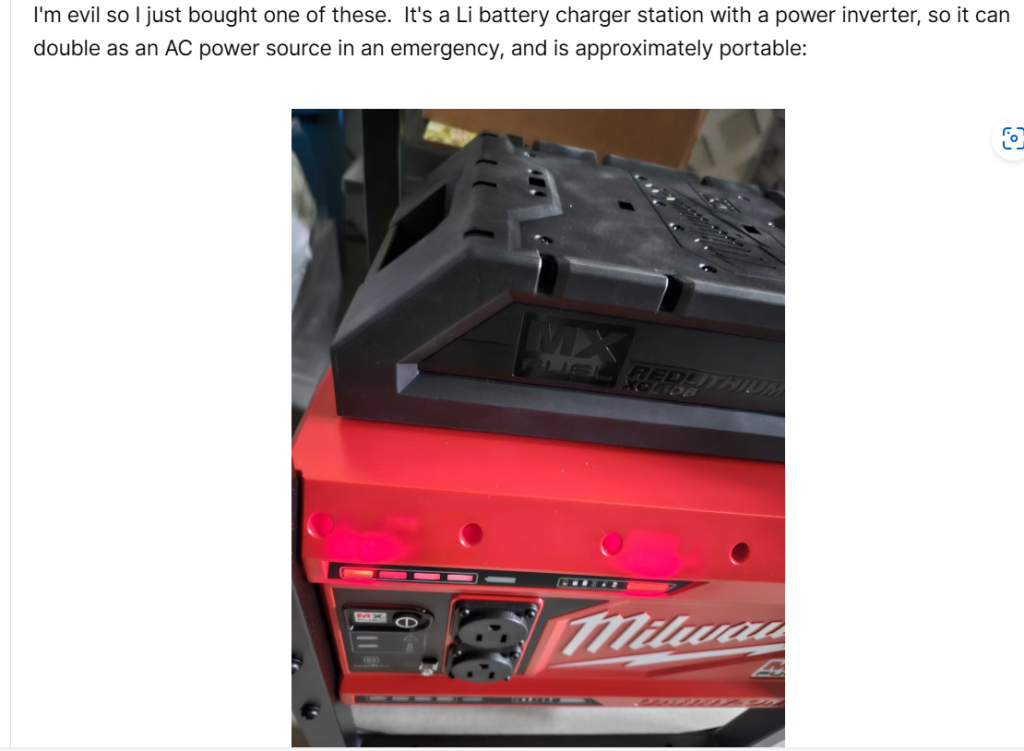
    It’s basically a power inverter so it does what solar panels (PV) can do your roof only with an Li Ion battery, and you need the grid to charge it up. First world to next world buffering device. It is more or less a Tesla you can carry, without the transportation parts. In the above pic, you see one of two possible batteries charging. It takes about 90 min per battery to charge, one at a time. Then you can use the batteries for whatever the power is rated for.